

Wastewater Treatment in Cosmetics, Pharmaceutical, Healthcare and Textile Manufacturing: Challenges and Engineering Solutions
Introduction: Why Wastewater Management Has Become a Strategic Priority
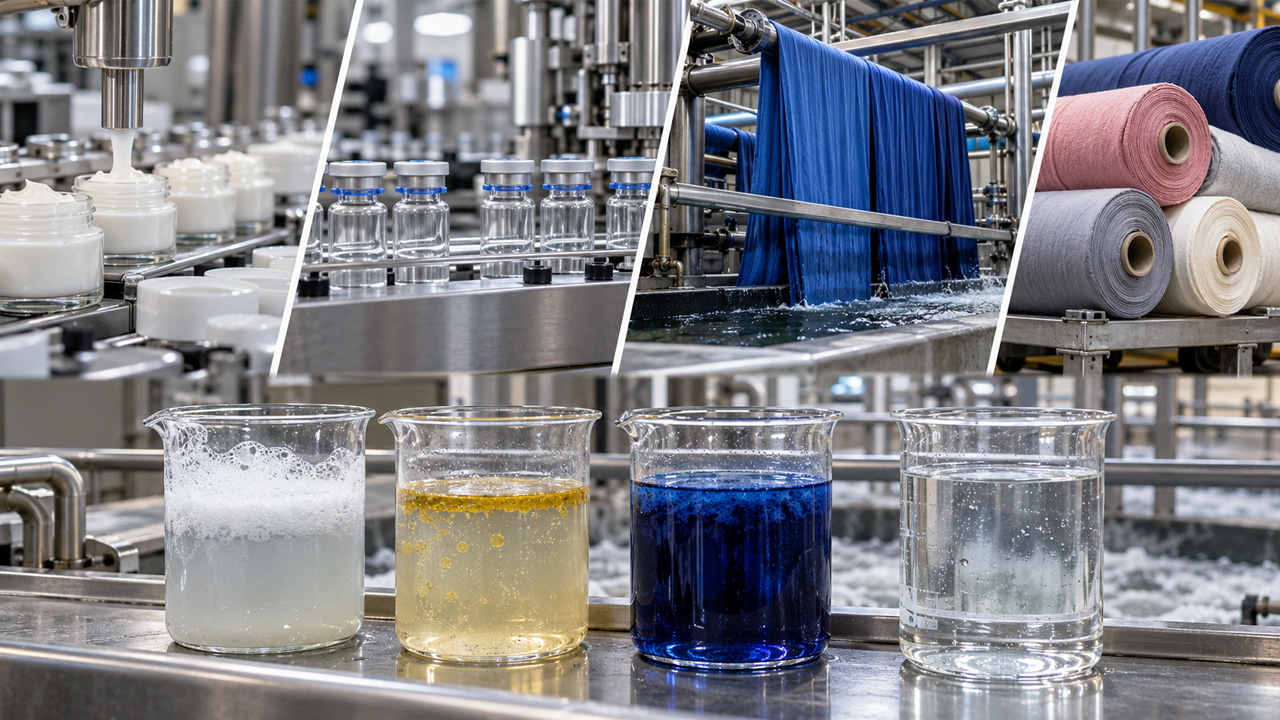
The cosmetics, pharmaceutical, healthcare and textile industries rely on increasingly sophisticated chemical formulations and production processes. While their products serve different markets, these sectors share a common challenge: the generation of highly complex wastewater streams that are difficult to treat using conventional technologies.
Regulatory requirements continue to tighten across Europe and globally. Limits on COD, BOD, salts and emerging contaminants are becoming more stringent, while water scarcity and corporate sustainability targets are pushing manufacturers toward water reuse and circular water management strategies.
As a result, wastewater treatment is no longer viewed solely as an environmental obligation. It has become a strategic factor influencing operational efficiency, production continuity, compliance and long-term competitiveness.
The Wastewater Characteristics That Make These Industries Unique
Unlike many traditional industrial sectors, cosmetics, pharmaceutical, healthcare and textile manufacturing generate wastewater containing a broad combination of organic and inorganic contaminants.
Cosmetics Industry
Cosmetics manufacturing wastewater typically contains:
- Surfactants and emulsifiers
- Oils and fats
- Preservatives and biocides
- Solvents
- Fragrances
- Microplastics
- High COD concentrations
These compounds often create stable emulsions and poorly biodegradable organic loads that challenge conventional treatment systems.
Pharmaceutical and Healthcare Industry
Wastewater from pharmaceutical and healthcare-related production may contain:
- Active Pharmaceutical Ingredients (APIs)
- Solvents
- Disinfectants
- Process chemicals
- Trace organic contaminants
Many of these substances are biologically persistent and may require advanced treatment technologies to achieve regulatory compliance.
Textile Industry
Textile manufacturing is among the most demanding wastewater treatment applications due to the combination of:
- Synthetic dyes and pigments
- Inorganic salts
- Solvents and auxiliaries
- Heavy metals (from dye fixation processes)
- High-temperature wastewater
- Strong pH fluctuations
The resulting effluents are often characterized by intense colour, high salinity and limited biodegradability.
Why Conventional Treatment Systems Often Struggle
Many facilities still rely primarily on biological wastewater treatment systems. While biological processes remain effective for biodegradable organic matter, they frequently encounter limitations when treating industrial wastewater generated by these sectors.
Common challenges include:
- Poor biodegradability of surfactants and specialty chemicals
- Toxic effects of APIs and disinfectants on biomass
- Inhibition of biological activity due to high salinity
- Resistance of synthetic dyes and complex aromatic compounds
- Significant fluctuations in wastewater composition
These factors can reduce treatment efficiency, compromise process stability and increase operating costs.
Key Engineering Challenges for Plant Managers
From an operational perspective, wastewater treatment systems must address several critical objectives simultaneously:
Managing High COD Loads
Many production processes generate wastewater with elevated COD concentrations that cannot be efficiently removed through biological treatment alone.
Handling Salinity
Particularly in textile production, salt concentrations can severely impact conventional treatment performance and limit water reuse opportunities.
Removing Colour and Micropollutants
Dyes, pigments and trace contaminants often require dedicated treatment stages to achieve discharge compliance.
Reducing Water Consumption
Growing pressure on freshwater resources is driving investments in water recovery and reuse systems.
Controlling Disposal Costs
Increasing costs associated with wastewater discharge, sludge handling and concentrate disposal are becoming major economic drivers for treatment system upgrades.
Integrated Treatment Strategies for Complex Industrial Effluents
Because of the diverse contaminant profile found in these industries, successful wastewater management rarely depends on a single technology.
Instead, treatment systems are increasingly designed as integrated solutions combining:
- Physical and chemical pretreatment
- Coagulation and flocculation
- Dissolved air flotation (DAF)
- Advanced oxidation processes
- Biological treatment for biodegradable fractions
- Membrane filtration technologies
- Concentration and water recovery systems
The objective is to select the most effective treatment mechanism for each contaminant group while maintaining operational flexibility.
Water Reuse and Resource Recovery
For many manufacturers, the next step is moving beyond compliance toward resource recovery.
Water reuse strategies can significantly reduce:
- Freshwater consumption
- Wastewater discharge volumes
- Disposal costs
- Exposure to water supply restrictions
Particularly in water-intensive industries such as textile manufacturing, water recycling can deliver both environmental and economic benefits.
Advanced concentration technologies, including MVR evaporation systems, may play an important role in maximizing water recovery and supporting Zero Liquid Discharge (ZLD) objectives. A detailed discussion of these technologies is available in our article on Integrated Industrial Wastewater Treatment and ZLD Solutions.
Industrial Application Examples
Textile Manufacturing
High-salinity wastewater streams generated during dyeing processes often challenge biological treatment systems. Integrated treatment approaches can significantly improve water recovery while reducing environmental discharge.
Cosmetics Manufacturing
Wastewater containing emulsions, surfactants and oils requires robust separation and treatment strategies to maintain stable plant performance and reduce disposal volumes.
Pharmaceutical Production
Facilities handling APIs and specialty chemicals increasingly require advanced treatment solutions capable of addressing complex organic contaminants while ensuring regulatory compliance.
Strategic Benefits of Modern Wastewater Management
Companies investing in advanced wastewater treatment solutions can achieve:
- Reduced freshwater demand
- Lower wastewater disposal costs
- Greater compliance reliability
- Improved ESG performance
- Increased operational resilience
- Enhanced long-term sustainability
For technical directors and plant managers, wastewater treatment is becoming a critical component of resource efficiency and risk management.
Conclusion
The cosmetics, pharmaceutical, healthcare and textile industries face some of the most complex wastewater treatment challenges in modern manufacturing.
High COD loads, surfactants, dyes, salts, APIs and fluctuating wastewater characteristics frequently exceed the capabilities of conventional standalone treatment systems.
As environmental regulations tighten and sustainability objectives become increasingly important, integrated wastewater management strategies provide a practical pathway toward compliance, water reuse and long-term operational efficiency.
Engineering-driven water management is no longer simply a regulatory requirement. It is a competitive advantage that supports both business performance and environmental responsibility.
Is your facility facing increasing discharge requirements, rising disposal costs or growing pressure to reduce freshwater consumption?
Contact our wastewater treatment specialists to evaluate the most effective treatment strategy for your specific production process.
Follow our blog for technical insights on industrial wastewater treatment, water reuse, MVR evaporation technology and Zero Liquid Discharge solutions.